
Skip to content
Compassion
Space

NeuroAffective Touch®

Helping you find healing through your body's natural wisdom.

Somatic therapy supporting your body with what it has carried

NeuroAffective Touch® is a gentle, body-based approach that bridges the space between traditional talking therapy and hands-on bodywork. It uses mindful touch, body awareness and dialogue to help you notice how your body holds stress, emotions and past experiences.

Before we have words, we learn about the world through being held, soothed, protected and responded to. When those early needs are not consistently met, talking alone may not always reach the parts of us that learned to cope through tension, numbness or disconnection.

Rather than trying to force the body to relax or release, we listen carefully to what it is communicating.

The treatment room — memory-foam table with a soft cover, warm lamplight, brass chimes, round mirror and armchair

Sessions are held on a memory-foam treatment table. We may also use blankets and warm, malleable therapeutic pillows to offer physical support and containment.

Willow branches hanging in soft golden light

You might be in the right place if…

You experience:

  • Tight shoulders, jaw, or a constantly braced body
  • Shallow or restricted breathing
  • Anxiety, hypervigilance or difficulty relaxing
  • Numbness or disconnection from your body

You struggle with:

  • Receiving care or tenderness
  • Longing for closeness while also feeling frightened by it
  • Understanding your patterns intellectually but still feeling caught in them physically

Your body may remember...

…the first time your feelings were met with "don't make a scene," "don't cry," or "you're being too sensitive." Or when expressing a need was met with rejection, shame or absence.

Your younger self may have decided that it was safer to keep everything inside. When a feeling or need does not feel safe to express, the nervous system may protect you. These responses are not signs that something is wrong with you. They are protective adaptations your body may have developed when support, safety or connection were not consistently available.
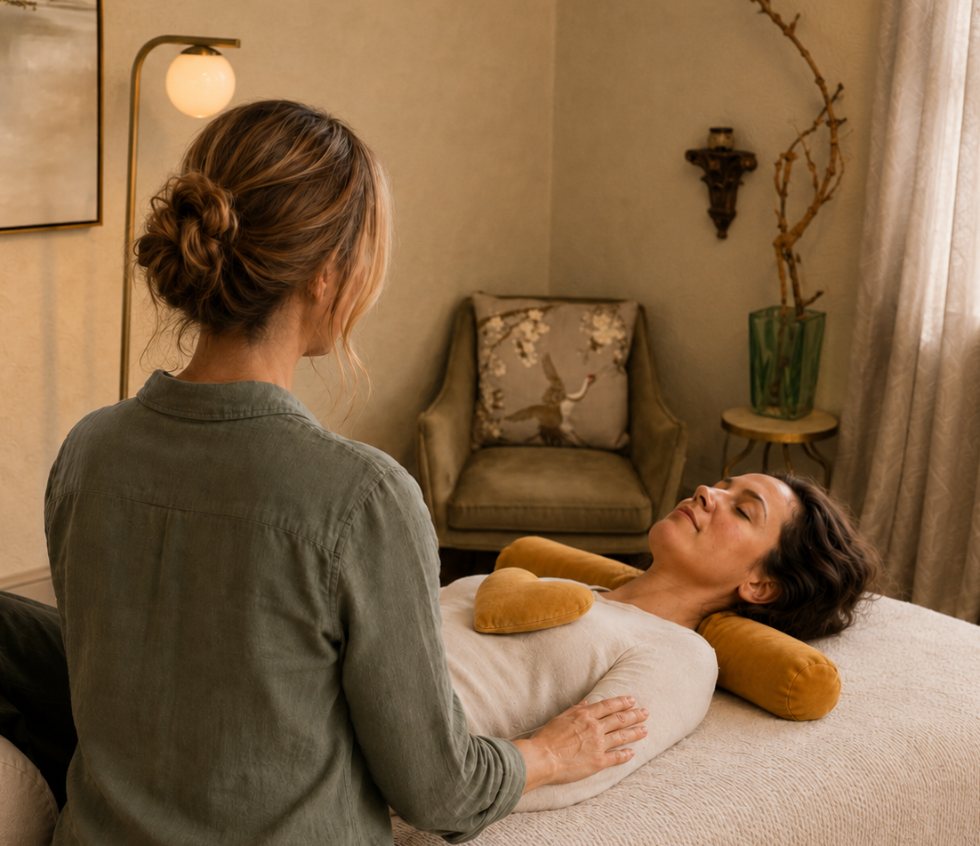
A NeuroAffective Touch session — client resting on the treatment table with warm bolster and heart-shaped pillow, therapist offering gentle supportive contact
"Healing early trauma begins with offering the missing non-verbal experiences of somatic support, attunement and safety."

— Dr Aline LaPierre, founder of NeuroAffective Touch®
Lone tree reflected in a still mountain lake as morning mist lifts

NeuroAffective Touch may help you:

  • Develop a greater sense of safety and support in your body
  • Become aware of habitual tension, bracing or restricted breathing
  • Strengthen the connection between your body, emotions and thoughts
  • Recognise and communicate your needs more clearly
  • Become more aware of your boundaries and desires
  • Practise receiving care without losing your sense of choice
  • Feel more grounded and connected to yourself
  • Experience greater ease, emotional awareness and self-compassion
"There is a voice that doesn't use words. Listen."
— Rumi

What can I expect from a NeuroAffective Touch session?

Sessions are always collaborative and client-led. Your preferences and boundaries guide the work, and you remain in control throughout.

Will touch always be included?
No. Touch is never assumed and does not need to be part of every session. We may also work through conversation, body awareness, movement, imagery or the supportive placement of heated pillows. Touch is only included following careful discussion and clear consent.
I will continue to check in with you during the session about your comfort and preferences. You can pause, change or stop at any time.
Why is consent an important part of the work?
It gives your body opportunities to notice:
  • what feels supportive
  • what feels uncertain
  • what feels like too much
  • what you would like more or less of
  • how it feels to communicate a need or boundary and have it respected
What kind of touch is used?
Touch is usually still, gentle and supportive. It may involve contact with areas such as the back, shoulders, head, hands or feet, depending entirely on what feels comfortable and appropriate for you.
What will I wear?
Sessions are fully clothed. People will often remove just their shoes.
What if I am unsure whether something feels right?
Noticing what feels supportive, uncertain or too much is an important part of the work. You do not need to know straight away or give a definite answer. We can slow down, pause and listen to what your body is communicating. Sometimes even moving something two millimetres to the left can make a difference, and the body appreciates us taking the time to get it just right.
Many of us have learned to rush past or override our own needs in order to take care of someone else. This work offers an opportunity to slow down and discover what feels right for you.
Why are warm therapeutic pillows used?
Warm, weighted therapeutic pillows can offer a gentle sense of physical support and containment. Their soft, mouldable shape allows them to be used as an extension of the therapist's hands, offering additional support where needed.
They can also provide a way to experience warmth and support without direct touch, which may feel more comfortable for people who are unsure about, or do not want, hands-on contact.
In NeuroAffective Touch®, the pillows may be placed around or beneath different areas of the body to support soothing, self-regulation and greater body awareness.