Trauma & Healing · 4 min read
The Body Remembers: Resmaa Menakem, Trauma and Somatic Healing
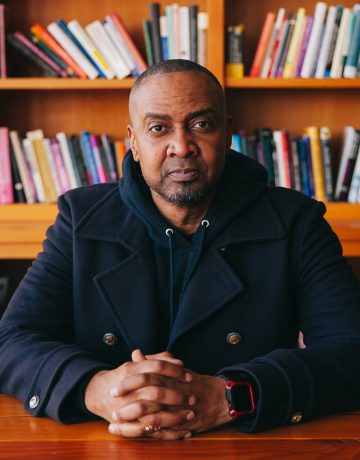
We often understand trauma as something that happens in the mind: a memory, a story, a set of beliefs, or a painful emotional response. But trauma is also held in the body. It can live in our breath, posture, muscles, gut, skin, nervous system and instinctive responses to the world around us.
This is one of the central contributions of the work of Resmaa Menakem, therapist, trauma specialist and author of My Grandmother’s Hands. Menakem’s work invites us to understand trauma not only as a personal experience, but also as something shaped by family, culture, history and systems of power. His writing is particularly known for exploring racialized trauma and the ways racism and white-body supremacy live not only in ideas or institutions, but in bodies.
This matters because we cannot always think our way out of what the body has learned. If our nervous system has been shaped by fear, threat, shame, exclusion, violence or survival, we may respond before we have time to reflect. We may tighten, freeze, collapse, appease, become hypervigilant, numb out, or move into protection without fully knowing why. The body is not being irrational; it is trying to protect us.
Menakem’s work reminds us that healing asks for more than insight. Insight can be important, but the body also needs new experiences of safety, settling, contact and choice. This is why somatic approaches to therapy pay attention to breath, sensation, movement, grounding, impulse, boundaries and the subtle ways the nervous system responds in relationship.
In therapy, this might mean slowing down enough to notice what happens in your body as you speak. Does your chest tighten? Do your shoulders lift? Do you stop breathing? Do you feel heat, numbness, pressure, collapse, agitation or the urge to disappear? These bodily responses can offer important information. They are not problems to be fixed, but communications to be listened to with care.
Menakem also places healing within a wider social and historical context. Trauma does not happen in isolation. We are shaped by our families, communities, cultures, ancestral histories and the systems we live within. For people who have experienced racism, marginalisation or other forms of oppression, the body may carry not only personal pain, but also the ongoing impact of living in a world that has not always offered safety, dignity or belonging.
This perspective is important because it moves therapy away from asking, “What is wrong with me?” and towards a more compassionate question: “What has my body had to carry?” It also invites us to consider how healing is not only individual, but relational and collective. We heal in bodies, but we also heal in relationship — with ourselves, with others, with community and with the wider world.
For white therapists and practitioners, Menakem’s work also offers a challenge. It asks us not to treat racism only as an intellectual or moral issue, but as something that must be worked with in the body. This means noticing defensiveness, shame, collapse, urgency, avoidance, numbness or the wish to be seen as “good”. These responses can become part of the work, not as a place to stop, but as a place to build more capacity, honesty and responsibility.
What I appreciate about Menakem’s work is that it brings together trauma, embodiment and social justice. It recognises that the nervous system is shaped by the world around us, and that meaningful healing needs to include the body. It also reminds us that the body is not only where trauma lives; it is also where resilience, dignity, connection and repair can begin.
In my own work, I am interested in how the body holds experience, how protection forms, and how we can gently create more space for awareness, choice and compassion. Sometimes the body speaks before words arrive. Sometimes healing begins not with an explanation, but with a breath, a softening, a boundary, a tremble, a pause, or the experience of being met without judgement.
Resmaa Menakem’s work offers a powerful reminder: healing is not only about understanding the past. It is about listening to the body in the present, tending to what has been carried, and creating new possibilities for how we live, relate and belong.
Samantha Whittaker · Compassion Space
← All posts