Trauma & Healing · Book club · 4 min read
Reading Pete Walker's CPTSD Book Together: From Surviving to Thriving
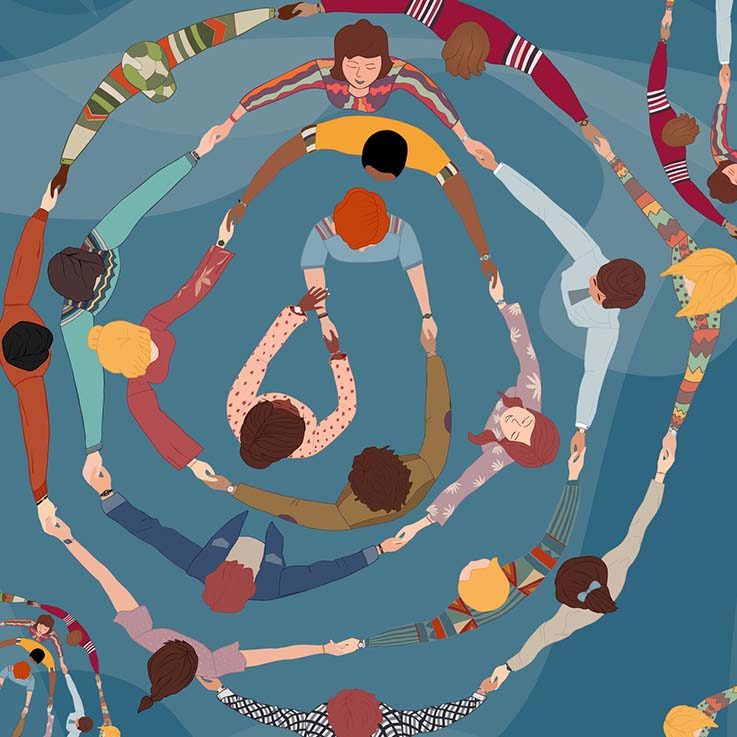
Reading Pete Walker’s CPTSD Book Together: From Surviving to Thriving
Many people are familiar with PTSD, but fewer have heard of complex PTSD, or CPTSD.
PTSD is often associated with a single overwhelming event. CPTSD can develop through prolonged or repeated experiences of trauma, particularly in childhood and within relationships where safety, protection and care should have been available.
Pete Walker’s humane and compassionate book, Complex PTSD: From Surviving to Thriving, has helped many people understand experiences that previously felt confusing or shameful. His work offers language for emotional flashbacks, the harsh inner critic, people-pleasing, perfectionism, shutdown and the survival responses that can continue long after the original danger has passed.
This year, I ran a monthly book club exploring Walker’s book. We met once a month, moving through it slowly and giving ourselves time to reflect on each section together.
I had already found the book valuable, but reading it in community offered something different. There was something deeply healing about sitting with others who recognised similar patterns and understood how difficult they could be.
Experiences that had felt isolating began to feel more understandable when they were named and witnessed by other with shared experiences.
Emotional flashbacks
One of Walker’s most helpful ideas is the emotional flashback.
Unlike a visual flashback, it may not involve a clear image or memory. Instead, we can suddenly become overwhelmed by fear, shame, helplessness or loneliness. A small disagreement, a change in someone’s tone or the possibility of disappointing someone may feel far more dangerous than the present situation seems to warrant.
We may feel very young, powerless or fundamentally unacceptable without immediately understanding why.
Instead of asking, “Why am I reacting like this?”, we started to ask:
Could this be an emotional flashback?
What feels familiar about this?
What might the frightened part of me need right now?
The four survival responses
Walker uses the four Fs, fight, flight, freeze and fawn, to describe ways children adapt when safety and secure connection are unavailable.
Fight may appear as anger, defensiveness or a need to stay in control.
Flight may become constant activity, anxiety, perfectionism or workaholism.
Freeze may involve withdrawal, numbness, dissociation or disappearing into sleep, fantasy or screens.
Fawn may appear as people-pleasing, appeasing others and losing contact with one’s own needs to preserve connection.
Most of us recognised more than one response. We began to see that patterns we had judged harshly often had an understandable purpose.
Perfectionism may once have reduced criticism. People-pleasing may have protected connection. Withdrawal may have prevented further overwhelm. Anger may have created a sense of strength when someone felt powerless.
Understanding why these responses developed does not mean they must continue to run our lives. It allows us to meet them with more compassion while developing other choices.
The inner critic
Walker also writes powerfully about the inner critic.
For people who grew up with criticism, rejection, unpredictability or emotional neglect, the voices of childhood can gradually become internal:
You are too much.
You are not good enough.
You should be coping better.
If you make a mistake, people will leave.
The inner critic may be trying to prevent rejection by scanning constantly for flaws and demanding perfection.
Why reading together felt healing
Trauma often develops in relationship, and healing also needs safe relationship.
Reading alone can bring insight, but sharing the book created opportunities for recognition, grief, humour and connection. A pattern you felt ashamed of could be met with understanding rather than judgement.
Meeting monthly gave us time to digest what we had read and notice how it appeared in daily life. We could return with questions, examples and moments when we had responded to ourselves differently.
Moving from surviving towards thriving
What I value most about Walker’s work is its compassionate message: many CPTSD symptoms make sense when understood as adaptations to prolonged experiences of danger, neglect or disconnection.
Recovery may involve recognising emotional flashbacks, softening the inner critic, grieving what was missing, developing healthier boundaries and building relationships in which vulnerability can be met more safely.
From Surviving to Thriving does not suggest a quick or perfect transformation. To me, it describes the gradual possibility of having more choice: noticing when the past has taken over, returning to the present and responding to ourselves with the care that may once have been unavailable.
I do not have to feel ashamed of how I survived.
And I do not have to work through all of this alone.
Samantha Whittaker · Compassion Space
← All posts