Neurodivergence · Book reflection · 3 min read
What The Autistic Survival Guide to Therapy Can Teach Us About Neuro-Affirming Therapy
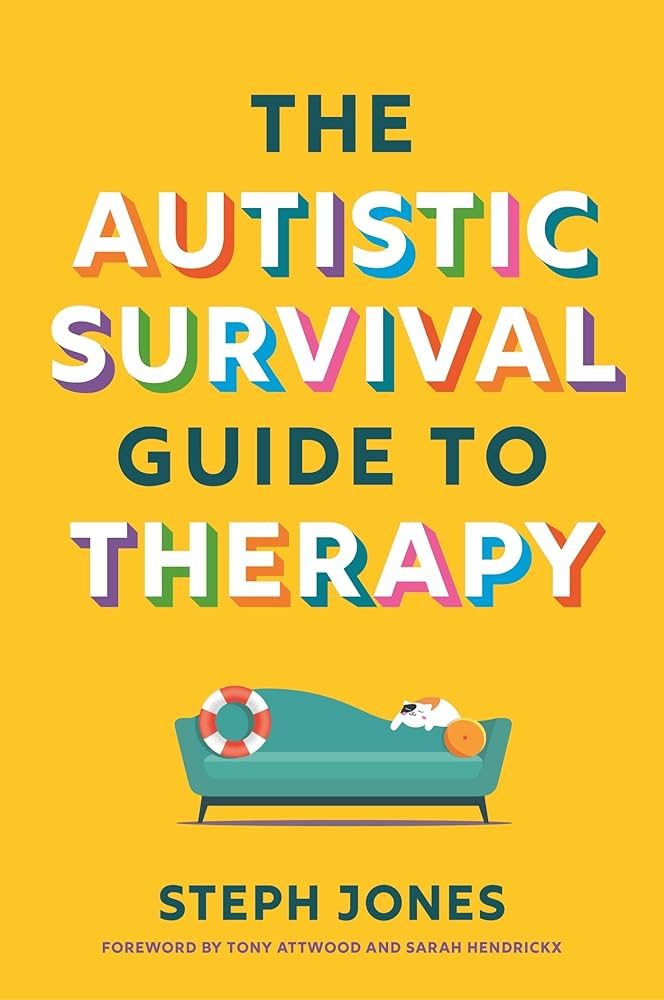
I recently read Steph Jones’s The Autistic Survival Guide to Therapy, a warm, candid exploration of what therapy can feel like from the perspective of an autistic client and therapist.
Drawing on both lived and professional experience, Jones examines subjects including harmful therapy, ableism, boundaries, the relationship between autism and trauma, and how therapists can offer genuinely neurodivergent-affirming support.
The book left me thinking about a question that should sit at the heart of all therapy:
Does this person feel able to be themselves here, or have they simply learned another way to perform?
For many autistic and neurodivergent people, therapy has not always felt safe, helpful or truly understanding.
Some people have spent years being misunderstood, misdiagnosed or subtly encouraged to become more “normal.” Others have learned to mask so thoroughly that even in therapy they find themselves performing, explaining, people-pleasing or trying to be the kind of client they think the therapist wants.
Steph Jones’ The Autistic Survival Guide to Therapy speaks powerfully to this reality. One of its clearest messages is that autistic people should not have to educate, persuade or perform in order to be understood. Therapy should not be another place where someone has to hide their distress or defend their needs.
A neuro-affirming approach begins somewhere different. It recognises that autism is not a flaw to be fixed, but a different way of experiencing and responding to the world. This does not mean ignoring distress. Autistic people may come to therapy with anxiety, burnout, trauma, depression, shame, grief or relationship difficulties. But these struggles need to be understood in context.
What has it cost to live in a world not designed for your nervous system?
How much energy has gone into appearing fine?
What parts of yourself have you had to hide in order to be accepted?
For many autistic adults, especially those diagnosed later in life or beginning to self-identify, therapy can become a place of re-understanding. Masking may begin to make sense as survival. Burnout may be understood as the cost of long-term over-adaptation. Shutdowns, meltdowns or withdrawal may be recognised as nervous system responses rather than personal failings.
A neuro-affirming therapist will not assume that eye contact, quick answers or a particular communication style are signs of progress. They will not confuse compliance with wellbeing or interpret everything through a neurotypical lens.
Instead, therapy can become more flexible and collaborative. This might mean slowing down, allowing silence, using writing or images, supporting sensory needs, offering more structure or checking what kind of communication feels most helpful. It also means paying attention to power, especially when someone has spent years being corrected, dismissed or taught not to trust their own experience.
Therapy can help rebuild that trust gently. Not by trying to make someone less autistic, but by supporting them to understand themselves more fully, reduce shame, notice what drains and sustains them, and find language for needs that may have gone unnamed for years.
A good therapeutic relationship can offer something deeply reparative: the experience of not having to perform normality in order to be respected.
You are allowed to ask for clarity.
You are allowed to need time.
You are allowed to communicate differently.
You are allowed to notice your limits.
At its best, neuro-affirming therapy is not about fixing who you are. It is about creating more space for honesty, safety, choice and self-understanding.
Samantha Whittaker · Compassion Space
← All posts